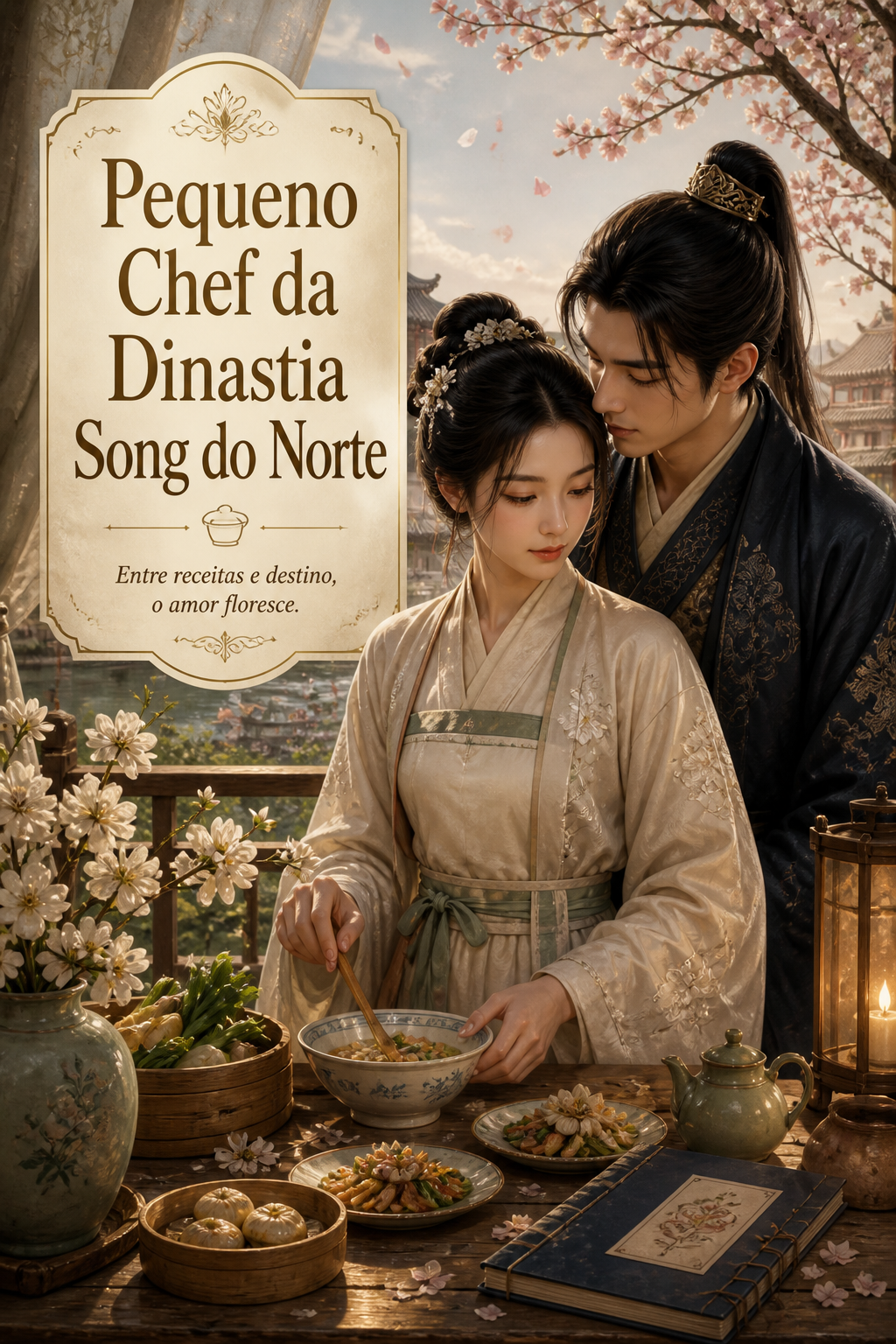
Pequeno Chef da Dinastia Song do Norte
Li Qi, chefe principal de um hotel super cinco estrelas, por ter bebido um pouco, milagrosamente acabou atravessando para o final da dinastia Song do Norte. Chegando a esse mundo estranho, sem parentes ou conhecidos, Li Qi, sem alternativas, decidiu recorrer à sua antiga profissão e tornou-se cozinheiro em um restaurante de Bianjing prestes a ser vendido por um preço irrisório. Li Qi originalmente só queria ser um humilde cozinheiro, mas, como dizem, o ouro brilha onde quer que esteja. Ser um homem excepcional nem sempre é algo bom. "O Grande Intendente Gao quer comer bife? — Não tenho tempo!" "O Mestre Cai quer comer fondue? — Diga para ele marcar com um mês de antecedência." "A cortesã Li Shishi quer comer salada de frutas? — Uh... não tenho tempo durante o dia, vou à noite."
Pequeno Chef da Dinastia Song do Norte
Page 1 of 3 — Chapter 1: The Drunkard (Part One)
A warm spring breeze caressed the face, and the willows breathed forth their tender green. The red sun hung high, and the sunlight fell soft and mild.
The Bian River. Its waters shimmered with a clear, rippling light, gliding past like silk. Pleasure boats shuttled back and forth across the surface, and from them drifted now the delicate strains of a zither, now peals of laughter, now the resonant cadence of someone reciting verse — the whole scene alive with noise and gaiety.
Along both banks, willows swayed in graceful rows. Sunlight fell upon their pale green leaves, lending them a lustrous, jade-like sheen, as though they had just been washed with water — a sight of uncommon beauty.
The streets flanking the river were even more resplendent, bustling with an unceasing flow of people: some shouldered carrying-poles and hurried on their way, others drove donkeys laden with goods, while a number of refined scholars and gentlemen lingered by the water's edge to admire the scenery, occasionally reciting a line or two of poetry. On either side, buildings rose in close succession — teahouses, taverns, pawnshops, workshops, and the like.
This street was known as Bian River Avenue, and it could be considered the very heart of the capital, Bianjing.
On the western side of a great arched bridge stood a three-storied pavilion, its eaves sweeping outward in graceful curves, its towers and galleries commanding an air of grandeur.
Suspended from the eaves of the second floor was a large s
📚 Related Recommendations
View More >